If Europe is on your travel list this year, there’s a new step at the border you’ll want to be prepared for. The European Union is introducing a new digital system called the Entry/Exit System (EES) and it changes how travellers enter the Schengen Area. Instead of a passport stamp, your arrival may now be recorded with a photo and fingerprints.
It’s a shift that’s designed to improve security, but it may also impact how smoothly your trip begins—especially during the early rollout. Here’s what to expect.
What’s the Entry/Exit System (EES)?
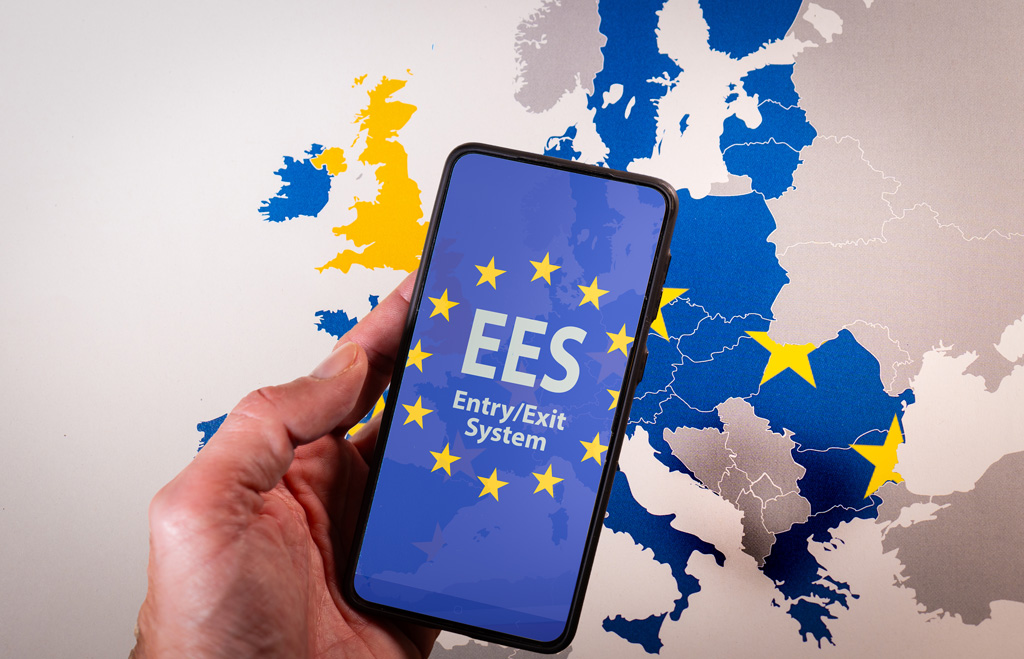
The Entry/Exit System (EES) replaces traditional passport stamping with a secure, electronic record of when travellers enter and leave participating European countries.
Instead of a stamp, your trip will be logged digitally using your personal and biometric information, including:
- Passport details
- Name and basic personal information
- Facial image
- Fingerprints
- Date and location of entry and exit
This information is stored in a centralized system to help track travel within the Schengen Area and identify overstays.
If it’s your first time using the system, the process may take a little longer as your information is recorded. On future visits, it should be quicker, with a simple biometric check instead of starting from scratch.
When is This Happening?
The rollout began on October 12, 2025, and is happening gradually across airports and border crossings, with full implementation expected by April 10, 2026. During this time, travellers may experience a mix of the new system and traditional passport checks depending on where they enter Europe.
Who Does This Apply To?
The system applies to non-EU travellers, including those from visa-free countries like Canada, the United States, the United Kingdom, and Australia. For short stays (up to 90 days within a 180-day period), travellers will be required to complete the biometric process upon entry.
EES will be used across 29 Schengen countries, including popular destinations like France, Italy, and Spain. However, some countries—such as Ireland and Cyprus—are not part of the system and will continue using their existing entry processes.
Children under 12 are exempt from fingerprinting, though a photo may still be taken.
During the rollout, it’s a good idea to plan for extra time at the airport, as some delays are expected while systems are being introduced.
Note: Are you a UK dual citizen travelling to the United Kingdom soon? Entry requirements have recently changed. Read this blog to check the latest updates before you go.
Another Change on the Horizon: ETIAS
The Entry/Exit System is just one part of Europe’s broader shift toward digital travel systems.
Next up isEuropean Travel Information and Authorization System (ETIAS)—a pre-travel authorization that visa-free travellers will need to complete before arriving in Europe.
Expected to launch in late 2026, ETIAS will involve a quick online application and a fee.
New systems like this are designed to improve travel but they can come with a learning curve. So as travel continues to evolve, one thing stays the same; being prepared means you can focus on what matters most, enjoying the journey.
Happy travels,
Monique
